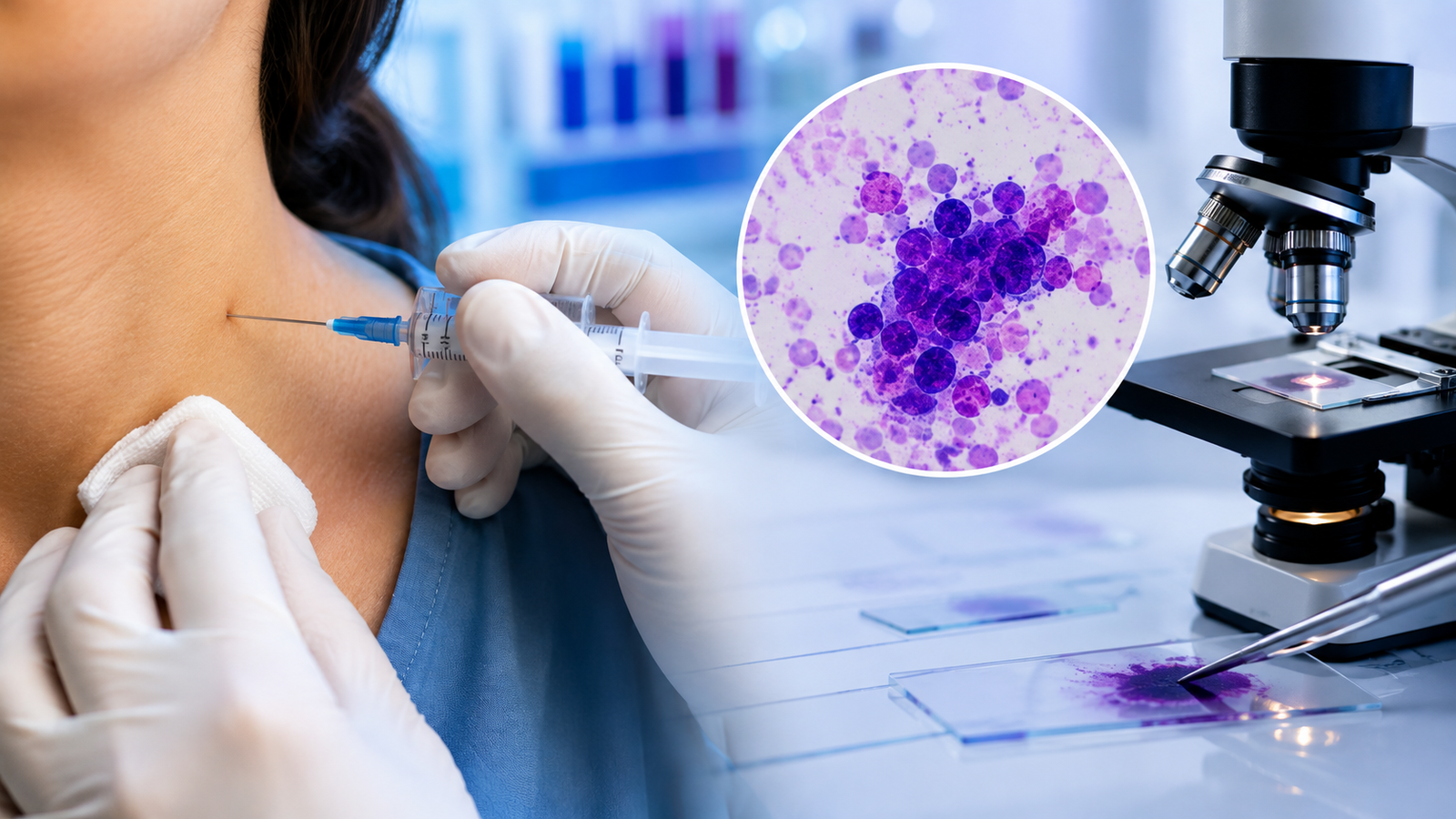
As a pathologist who has performed and reported hundreds of Fine Needle Aspiration Cytology (FNAC) procedures, I often encounter patients who arrive nervous and uncertain about what the test involves. The reality is that FNAC is one of the most useful, quick, and low-risk diagnostic tools we have — and in many cases it gives a definitive answer without any surgery.
What Is FNAC?
Fine Needle Aspiration Cytology is a procedure where a thin, fine needle is inserted into a lump or swelling — in the neck, breast, lymph node, thyroid, or soft tissue — to withdraw a small sample of cells. These cells are then examined under a microscope by a pathologist to determine whether the lesion is benign, malignant, or inflammatory.
Is It Painful?
Most patients describe the sensation as similar to a routine blood test. The needle used is very fine — thinner than those used for injections — and the procedure typically takes less than five minutes. Local anaesthesia is used for deeper lesions if needed.
What Can FNAC Diagnose?
FNAC is used to evaluate thyroid nodules, swollen lymph nodes, breast lumps, salivary gland swellings, soft tissue masses, and skin lesions. It can detect cancers, infections like tuberculosis, inflammatory conditions, and rare disorders.
A Case That Demonstrates FNAC's Power
In one of my published case reports, a 52-year-old diabetic male presented with a nodular swelling near his ankle — which was clinically presumed to be a diabetic foot complication. Surgical intervention was being considered. FNAC revealed it was actually a gouty tophus — a completely different condition requiring medical management, not surgery. This single test spared the patient an unnecessary operation and directed him to the correct treatment immediately.
When Should You Get an FNAC Done?
If you have any unexplained swelling or lump that has persisted for more than 2–3 weeks — particularly in the neck, armpit, breast, or groin — an FNAC is often the first and most useful investigation your doctor will recommend. Do not delay. Early pathological diagnosis is the cornerstone of effective treatment.